Short answer
A padel net is 10 m long, 0.88 m high at the centre and 0.92 m at the ends, hung on a cable of up to 1 cm from posts no higher than 1.05 m. The metal mesh around the court must have openings with a 5–7.08 cm diagonal and wire of 2–3 mm (4 mm maximum), with every weld point protected.
Glass walls get most of the attention, but the net and the metal mesh are touched in almost every rally. They decide whether rebounds are predictable, whether players can safely run into the enclosure and how the court looks after a few seasons outdoors. This guide sets out what the FIP Rules of Padel require and what to check before you accept a court.
What are the FIP rules for the padel net?
| Element | FIP requirement |
|---|---|
| Length | 10 m, filling the space between the posts with no gaps |
| Height | 0.88 m at the centre, 0.92 m at the ends, tolerance 5 mm |
| Suspension cable | Metal, maximum diameter 1 cm |
| Posts | Maximum height 1.05 m, rounded edges, outer face in line with the side of the court |
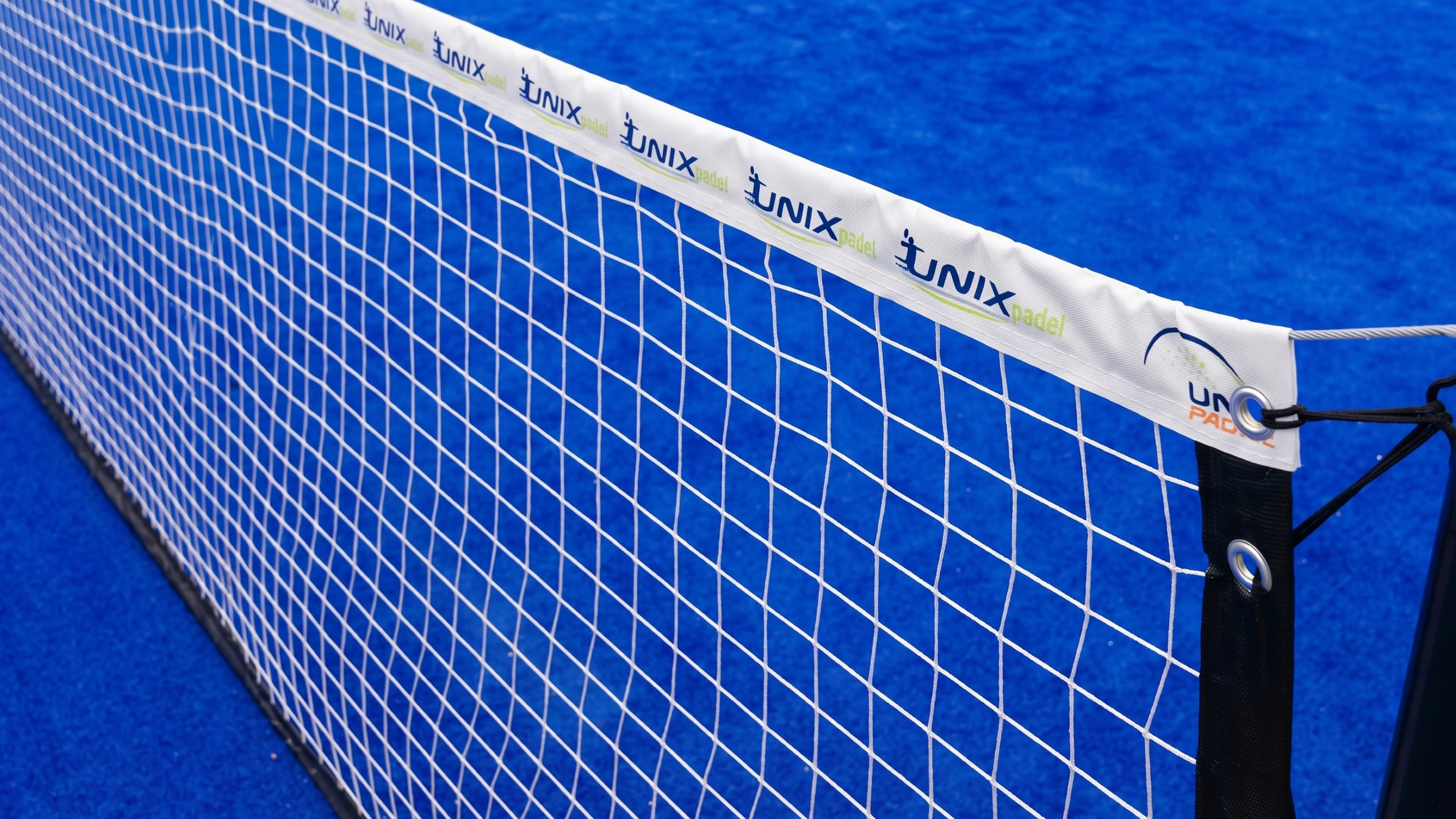
| Headband | White strip 5.0–6.3 cm wide covering the cable; with advertising, no higher than 11 cm in total |
| Net mesh | Synthetic fibre, woven narrow enough that the ball cannot pass |
| Tension system | Must not loosen unexpectedly or put players at risk |
The net should hang fully extended without being drum-tight, and nothing may be attached to its strings.
What makes a durable net?
- UV-stabilised synthetic fibres (polyethylene or polypropylene) that do not fade or turn brittle in the sun.
- A heavy-duty, double-stitched headband that resists tearing where the ball hits most.
- A coated steel cable that does not rust inside the headband, with a tensioner that holds its setting.
What are the FIP rules for the metal mesh?
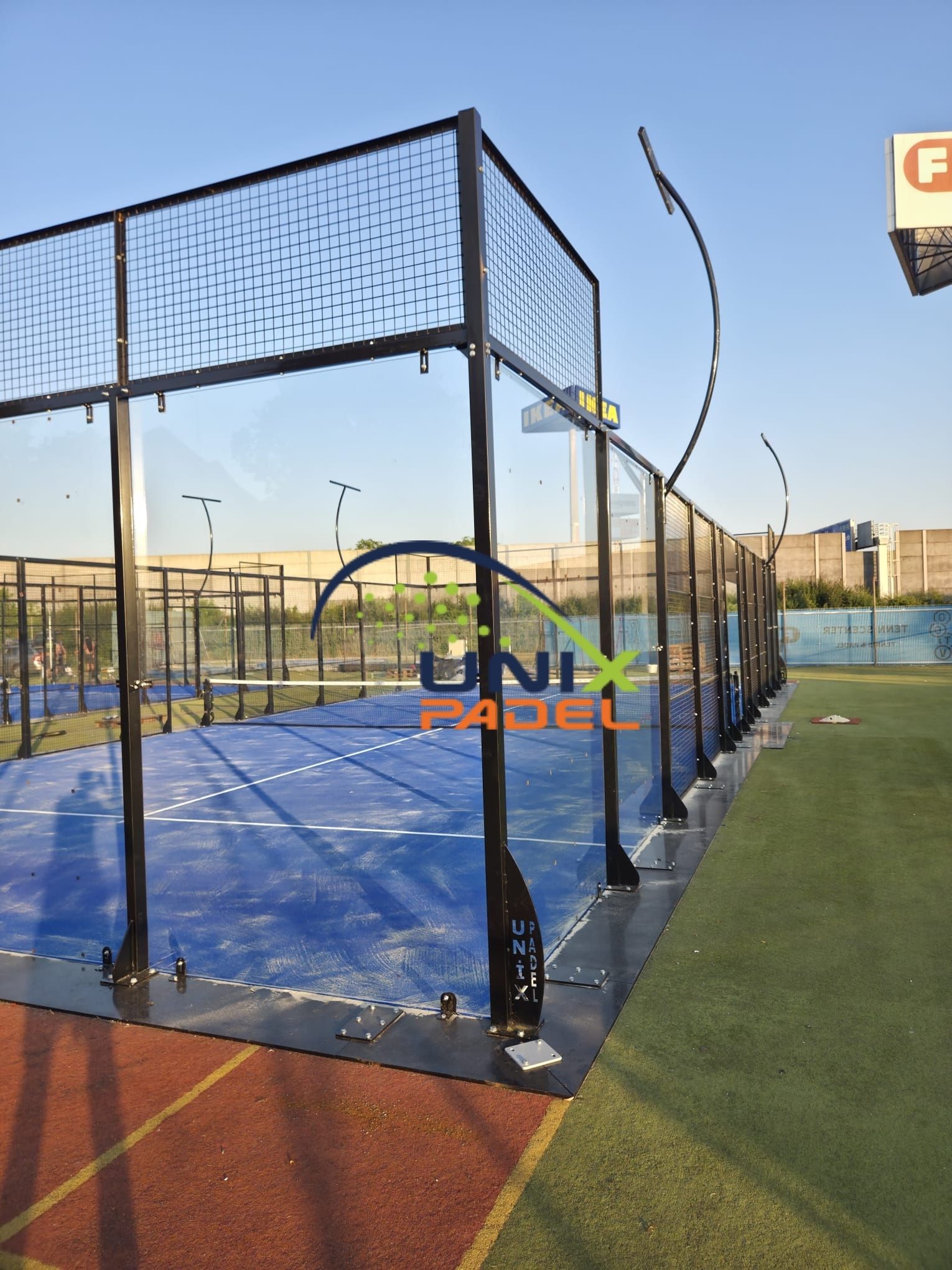
The mesh completes the enclosure above and between the glass panels and is an active playing surface. The FIP requires:
- Opening size: a diagonal of no less than 5 cm and no more than 7.08 cm.
- Wire thickness: 2–3 mm recommended, 4 mm maximum, with enough tension for the ball to bounce.
- Safe welds: on welded mesh, every weld point protected on both sides against cuts; welded mesh that is not interlaced must use squares, not rhomboids.
- A flat, vertical surface in line with the inner face of the glass, without sharp or protruding ends.
Unixpadel courts use 50 x 50 mm electro-welded steel mesh with 4 mm wire. The diagonal of a 50 mm square is about 7.07 cm, inside the FIP limit, and the 4 mm wire gives the stiffest panel the rules allow.
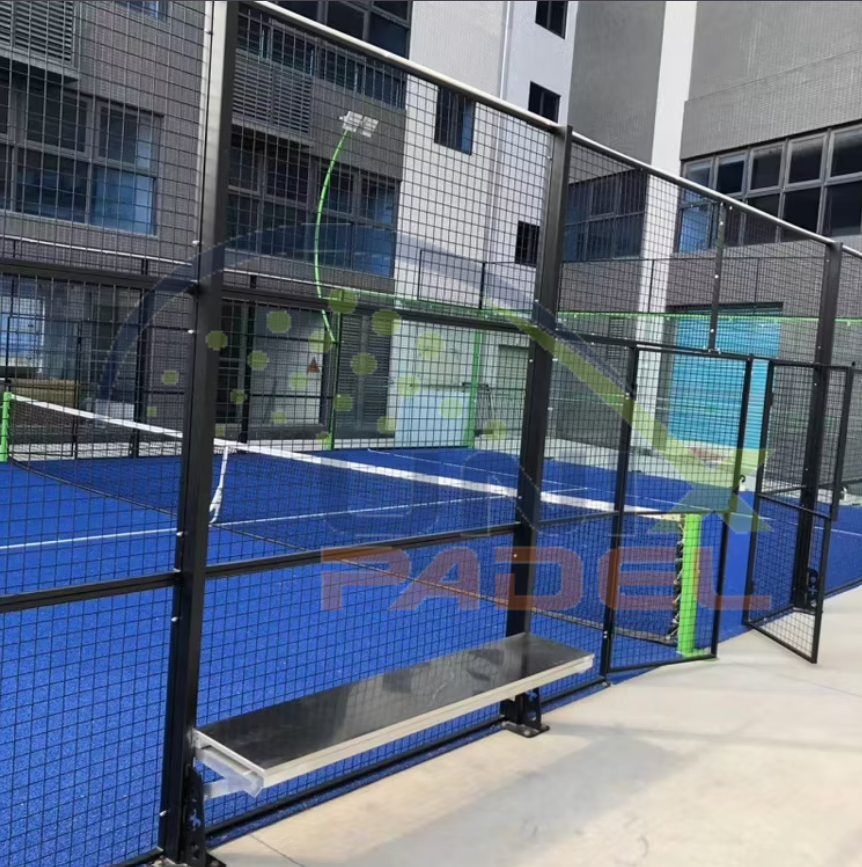
How is the mesh protected against corrosion?
Outdoor mesh is exposed to rain, UV and, near the sea, salt. Unixpadel mesh panels and frames are hot-dip galvanized and then powder coated, so the zinc protects the steel even where the paint is scratched. For seaside and humid sites, read coastal padel courts; the choice of steel itself is covered in steel types for padel courts.
What should you check before accepting a court?
- Net height measured at the centre and both ends.
- Net posts with rounded edges and no gap between the net and the posts.
- Mesh panels flat, tight and flush with the glass, with no loose or rattling panels.
- No protruding wire ends or rough welds on the inside of the court.
- Padding of at least 2 cm on the sides and top of each access opening and on the net posts.
- Anti-vibration gaskets between mesh panels and the frame to limit noise.
How do you keep the net and mesh in shape?
Check net height and cable tension monthly, and inspect mesh panels and fixings for loosened bolts, damaged coating or rust spots. Small coating damage can be repaired on site; the routine is in padel court maintenance. Replacement nets, posts and mesh panels are available through Unixpadel repair and accessories.
The full set of court measurements is in padel court dimensions. Questions about a specific court or replacement parts? Contact our technical team.